
2–3 days · 1–2 nights · default stay

China · East China Sea Archipelago · Sacred Guanyin Island Monastery, Zhujiajian Coast & Island Seafood Ports

Zhoushan & Mount Putuo 舟山与普陀山

Sacred Guanyin Buddhist island of Mount Putuo, East China Sea archipelago breezes, sandy beaches, and fresh seafood ports.

Recommended stay2–3 days · 1–2 nights
Ease of travel8/10
First China trip7/10
Infrastructure8/10
Sweeping panorama of the sacred granite peaks, coastal cloisters, and blue East China Sea waves of Mount Putuo in Zhoushan
29.98°N · 122.38°E East China Sea Archipelago · Sacred Guanyin Island Monastery & Zhujiajian Coast
Photo: xiquinhosilva (CC BY 4.0) · Wikimedia Commons

Why this place

Zhoushan & Mount Putuo

Mount Putuo is one of China’s four great Buddhist sacred mountains, the designated abode of Guanyin, the Bodhisattva of Compassion. Set amid a scattered archipelago of granite islets washed by the East China Sea, it binds monastic architecture, tide-carved rock formations and open coastal vistas into one continuous devotional landscape. The wider Zhoushan chain remains a working fishing territory, its livelihood shaped by seasonal yellow croaker runs and daily ferry rhythms.

Do not treat Mount Putuo purely as a checklist of temples. Its power lies in quiet, weathered atmosphere: salt wind moving through pine groves, the low hum of sutra recitation inside Puji Temple, and the slow shift of light over the South Sea Guanyin statue at dusk. Many visitors rush the island in a half-day ferry dash and leave without absorbing its rhythm; the biggest traps are overpriced incense hustlers at the pier and seafood stalls quoting vague per-weight prices to unknowing guests.
The ChinaTrip take

Oceanic Chants, Golden Sand Waves and the Sacred Isle of Guanyin

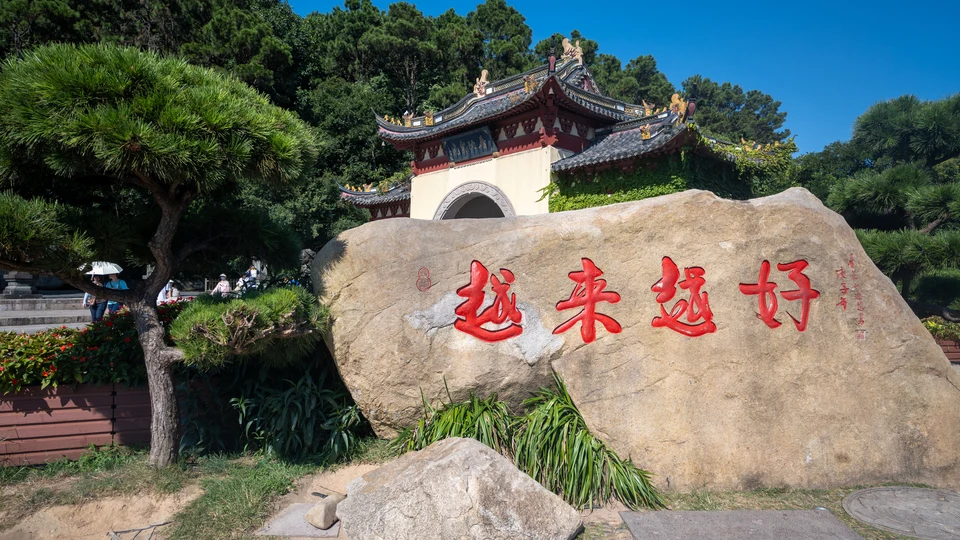
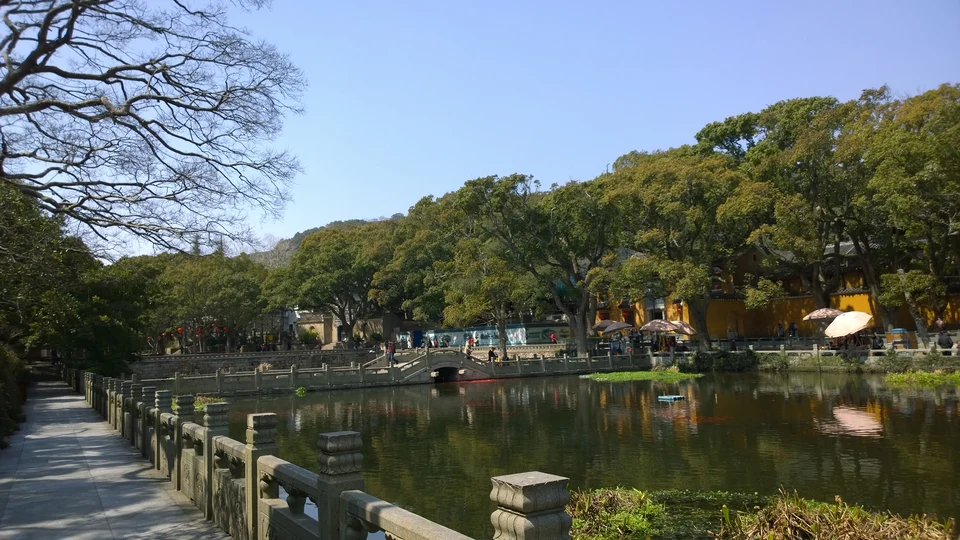
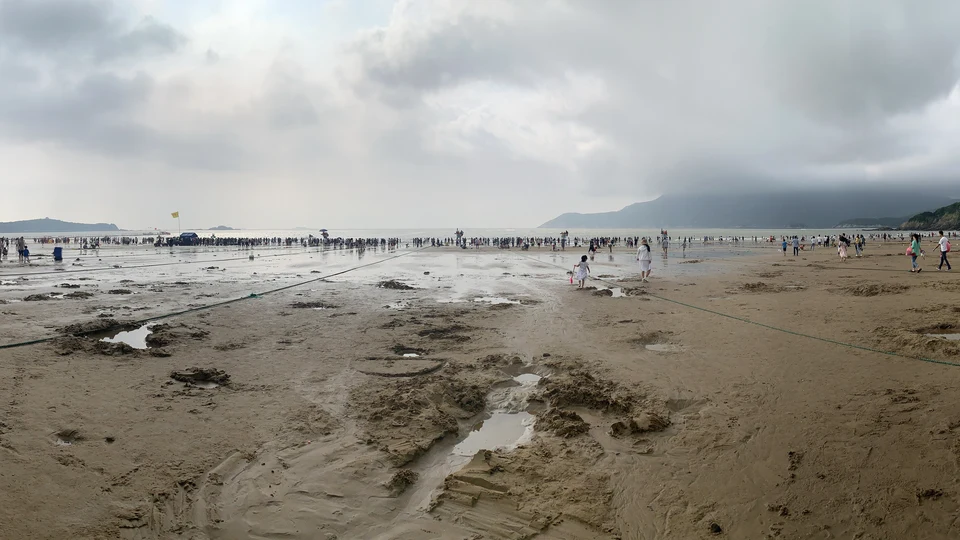
Rising like an emerald lotus from the churning waters of the East China Sea, Mount Putuo (普陀山) in the Zhoushan archipelago is revered throughout Asia as the sacred sanctuary of Guanyin, the Bodhisattva of Compassion. Unlike China’s inland mountain hermitages, Putuo weaves coastal topography and Mahayana devotional monasticism into one seamless seascape. The 33-meter bronze colossus of the South Sea Guanyin stands guard over the rolling tides, while the shaded cloisters of Puji, Fayu, and Huiji Zen Temples nestle beneath ancient camphor trees and whispering bamboo groves. Beyond the monastic halls, the island unfolds into broad beaches like Thousand-Step Golden Sands and weathered rocky promontories. Back across the bay on Zhujiajian and the bustling fishing quays of Shenjiamen, thousands of vibrant trawlers dock daily to unload East China Sea catches—from succulent wild-caught yellow croaker and steamed ribbonfish to salty sea breezes, creating a fascinating harmony between spiritual serenity and authentic island seafaring life.

How this destination fits a China trip

01

What defines it

The 33-meter South Sea Guanyin bronze statue, sacred coastal Zen monasteries (Puji and Fayu), and Shenjiamen fishing harbor.

02

Who it suits best

Buddhist cultural pilgrims, coastal island explorers, architectural admirers, and fresh marine seafood enthusiasts.

03

Plan around this

Travel by passenger catamaran from Zhujiajian; reject incense touts at the wharf; pack light for island bus transfers.

ChinaTrip scorecard

The same 0–10 scale is calibrated across our entire catalogue, ensuring comparisons remain strictly reliable.

Culture10/10
Food9/10
History9/10
Nightlife5/10
Heritage & Architecture10/10
Nature8/10
Wildlife5/10
Adventure5/10
Local feel8/10
Photography9/10

Plan China

Getting there & moving on

Practical transit guidance from ChinaTrip’s curated high-speed rail and flight graph. Times are realistic door-to-door estimates.

Main planning gateway

Zhoushan Putuoshan Airport (HSN) · Ningbo Railway Station Transfer · Zhujiajian Passenger Wharf

Typical access High-speed rail to Ningbo Station + 1.5 hr expressway bus across Zhoushan Cross-Sea Bridges to Zhujiajian Passenger Wharf, then 15 min catamaran ferry to Mount Putuo
Gateway transfer 15 min fast passenger catamaran between Zhujiajian Centurial Wharf and Mount Putuo Dock; public island buses cover internal monastery routes High-speed rail terminates at Ningbo on the mainland; seamless expressway buses run from Ningbo Railway Station directly to Zhujiajian Wharf. Frequent catamarans run every 15 minutes. Note private vehicles are prohibited on Mount Putuo island; travel is by official island bus or walking.
Entry clearance 30-Day Visa-Free Hub 50 eligible nations · No city limits

An archipelago of over a thousand islands in the East China Sea, anchored by the sacred granite peaks, coastal bamboo groves, and golden sandy beaches of Mount Putuo. It features a humid subtropical marine climate with cool winters and warm, breezy summers.

Good onward connections

These are the strongest high-speed rail next-step links in the curated ChinaTrip route graph, not an exhaustive railway timetable.

Times are realistic door-to-door high-speed rail estimates. Bullet trains run directly between central downtown stations without airport transit buffers.

When to go

Season matters. Calibrated climate, atmospheric clarity, crowd volume, and overall travel fit for Zhoushan & Mount Putuo.

9–10 / 10 · Ideal (Best weather) 7–8 / 10 · Good (Shoulder season) 5–6 / 10 · Caution (Heat, cold or crowd peak)
Best Window
Spring (Mar–May) & Autumn (Sep–Nov)

Delightful travel conditions with blossoming gardens, golden osmanthus fragrance, and comfortable temperatures for water-town wandering.

Shoulder Season
Shoulder Season (Mar, Jun, Jul, Aug, Nov)

Manageable weather with mild days and shorter queues at signature cultural institutions.

Challenging / Low
Jul–Aug (Summer Swelter) & Jan–Feb (Damp Cold)

Mid-summer brings high humidity and temperatures reaching 38°C+. Mid-winter has piercing damp chill without central heating.

Jan 6/10 Cold
Feb 6/10 Cold
Mar 7/10 Good
Apr 9/10 Ideal
May 9/10 Ideal
Jun 8/10 Good
Jul 7/10 Good
Aug 7/10 Good
Sep 10/10 Ideal
Oct 10/10 Ideal
Nov 8/10 Good
Dec 6/10 Cold

A strong first visit in 2 days

Day 1

South Sea Guanyin Bronze, Purple Bamboo Grove & Puji Zen Monastery

What to see & do: Arrive by morning ferry and head first to the towering bronze South Sea Guanyin statue, positioned facing open water. Wander the adjacent Purple Bamboo Grove, a shaded coastal garden dotted with tide pools and small shrines. Continue uphill to Puji Temple, the island’s primary monastery, with courtyards, ancient camphor trees and a central pond. What tourist trap to skip: Reject vendors at the wharf selling 'blessed high incense' for inflated sums; official temples distribute free thin incense sticks for worship. Dining advice: Eat simple vegetarian monastery meals at Puji’s canteen, light and seasoned with local seaweed and tofu. For seafood later, head to Shenjiamen fishing port on Zhujiajian for steamed ribbonfish, where pricing is more transparent than island restaurants.

Day 2

Huiji Temple Summit, Fayu Monastery & Thousand-Step Golden Sands

What to see & do: Take the cable car or hike upward to Huiji Temple on Fo Ding Hill, the highest point on the island with unobstructed sea views. Descend to Fayu Temple, a quieter, sprawling monastic compound built into the hillside. In the late afternoon, catch the ferry back to Zhujiajian and walk Thousand-Step Golden Sands beach. What tourist trap to skip: Avoid self-appointed 'spiritual guides' offering private blessing ceremonies and amulets for fixed fees. Dining advice: Try wild-caught yellow croaker steamed lightly with ginger, the signature catch of Zhoushan waters, paired with a bowl of clear seafood broth at a family-run stall in Shenjiamen.

Who does it suit?

First-time China travellers7/10
History & culture buffs10/10
Couples9/10
Families with teenagers8/10
Photographers9/10
Active travellers5/10
Slow travel9/10
Solo travellers8/10

ChinaTrip Verdict

How long should you stay?

We recommend 2–3 days · 1–2 nights for most international travelers. That gives you dedicated unhurried time to absorb the primary highlights without feeling rushed or stretching beyond the useful range.

Direct answers

Essential travel FAQ & warnings

Fact-checked official entry rules, ticket release schedules, and logistics advisories for international visitors.

Booking & Logistics Note

How can foreign visitors book Mount Putuo entry tickets and ferry passes without mainland WeChat?

Official combo entry and ferry tickets can be purchased via Trip.com English or at the Zhujiajian Wharf physical foreign passport ticketing window. The mainland-only WeChat mini-program cannot reliably process foreign passport bookings. Bring your original passport for inspection at boarding and the island entrance.

Local Tip

What seafood pricing traps and incense scams should international travelers watch for?

Never buy incense from hustlers crowding the ferry terminal; all major temples provide complimentary standard incense for worship. Seafood restaurants on Mount Putuo island often mark up catches heavily, and tank fish may be priced by 500g without clear signage. Confirm total cost before ordering live seafood.

Practical Check-in Note

What ferry weather suspensions, luggage transfer guidelines, and foreign guest registration rules apply?

Catamarans may be cancelled or delayed during strong winds or typhoon alerts between July and September. Large suitcases are permitted on ferries but storage space is limited; pack lightly for the island. All non-Chinese passport holders must complete temporary residence registration with their hotel on Zhujiajian or Mount Putuo.

Universal China Travel Policies

Nationwide Regulations & Booking Rules for Foreign Passport Holders

These official real-name entry, ticketing, and immigration rules apply uniformly across all Chinese cities:

Global Booking Rule Can foreign passport holders book attraction tickets on Chinese WeChat mini-programs?

Most official Chinese WeChat mini-programs support passport as an ID type, but registration requires a mainland Chinese +86 mobile phone number for SMS verification. Most overseas visitors cannot register independently.

Global Booking Rule What booking channels are available for foreign visitors without a Chinese mobile number?

Four practical booking channels (priority order):
1. Recommended self-booking: International OTA platforms (Trip.com international site, Klook, GetYourGuide). English interface, register with overseas email or foreign mobile number, pay with Visa/Mastercard, directly fill passport details.
2. Official English website (only available for a small number of scenic sites).
3. Hotel concierge or licensed local guide. Provide your passport copy; they can book tickets via official mini-program using their Chinese mobile number.
4. Emergency on-site backup: Foreigner service ticket counter or multi-language self-service machines at the attraction. Warning: during peak seasons, timed tickets often sell out fully in advance. On-site purchase is not guaranteed and queues can be long.

Global Booking Rule Do I need to pick a visit date on Trip.com? Are booking and reservation handled on separate websites?

Booking and timed reservation are completed together inside Trip.com international site, no second website or WeChat mini-program required.
While purchasing tickets, you directly choose your visit date. Many popular attractions also require selection of entry time slot, entry gate or sightseeing route. Fill passport information and complete payment. Once confirmed, your real-name reservation slot is locked under your passport automatically.
Important Warning: A small subset of products are voucher-only; these only give a redeem code and still require separate reservation on official sites. Always select items labelled Direct Timed Entry Ticket.
For multi-day re-entry (such as Zhangjiajie’s 4-day ticket), check product description: free re-entry time slots may still need separate reservation even when your main ticket remains valid.

Global Entry Rule Can I enter attractions using only a photo or scanned copy of my passport?

No. Physical original passport is mandatory for entry at all scenic sites. Photos, screenshots, digital scans of passport are not accepted for manual verification or facial recognition checks.

Immigration & Accommodation What is the accommodation registration rule for foreign visitors?

Foreign passport holders must complete accommodation registration within 24 hours after entering China. If you check into a licensed hotel, the hotel staff will automatically complete this registration for you. No need for you to personally visit a police station.

Immigration & Accommodation What is China’s visa-free entry policy for foreign tourists?

China offers unilateral visa-free entry for citizens from a list of countries. Visa-free travel is valid for mainland China, you can travel to any city within the allowed stay period. Visa-free permission does not cover Hong Kong, Macau or Taiwan. Check the official National Immigration Administration website for the latest country list and maximum stay duration before travel.

ℹ️ All information is fact-checked against official authorities. Verified ticket & train links may earn ChinaTrip a modest commission at zero cost to you.

Does Zhoushan & Mount Putuo sound like your China?

Use Find Your China to compare this destination with the rest of the country using your own priorities.