
2–3 days · 1–2 nights · default stay

China · Yangtze & Grand Canal Nexus · Jinshan Temple, Beigu Mountain Cliffs & Century-Old Vinegar Culture

Zhenjiang 镇江

Yangtze and Grand Canal nexus, three legendary river hills, Xijin Ferry lanes, and century-old aromatic black vinegar brewing.

Recommended stay2–3 days · 1–2 nights
Ease of travel8/10
First China trip6/10
Infrastructure8/10
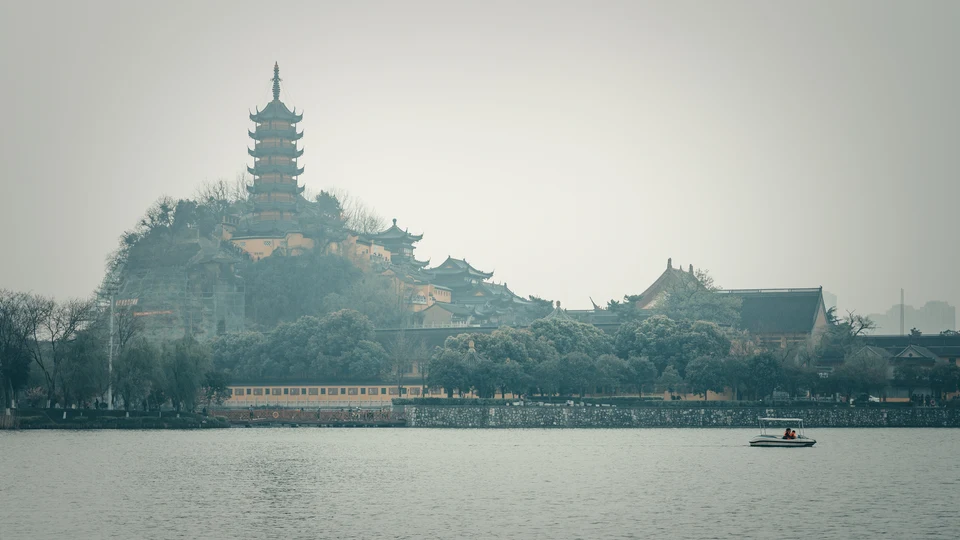
Majestic daylight panorama of Jinshan Temple pagoda and Buddhist monastic halls rising above scenic lotus ponds in Zhenjiang
32.21°N · 119.45°E Yangtze & Grand Canal Nexus · Three Historic Hills & Ancient Ferries
Photo: Cjsy2026 (CC BY-SA 4.0) · Wikimedia Commons

Why this place

Zhenjiang

Perched exactly where the Yangtze cuts across the Grand Canal, Zhenjiang is a compact river city stitched together by three small, steep hills anchored in folklore and calligraphy. It carries layers of medieval Buddhist monastic history, Three Kingdoms romance and canal trade that shaped grain and vinegar routes for centuries, without the crowds of nearby Suzhou or Nanjing.

Do not treat it as a quick day-tick on a Jiangsu itinerary. Its power lies in slow riverside pacing: reading stele inscriptions at Jiaoshan, watching light wrap around Jinshan’s pagoda at dusk, and eating simple Guogaimian at neighbourhood stalls rather than themed tourist restaurants. Many packaged 'vinegar tasting' experiences overcharge for mass-produced bottles; seek small family workshops instead.
The ChinaTrip take

Monastic River Peaks, Calligraphic Stele Forests and Ancient Ferries Where Yangtze Meets Canal

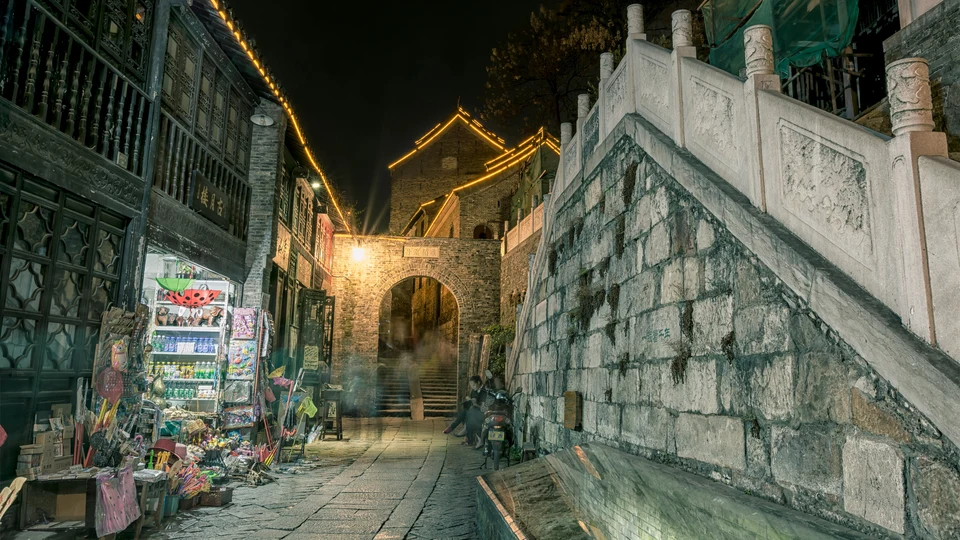
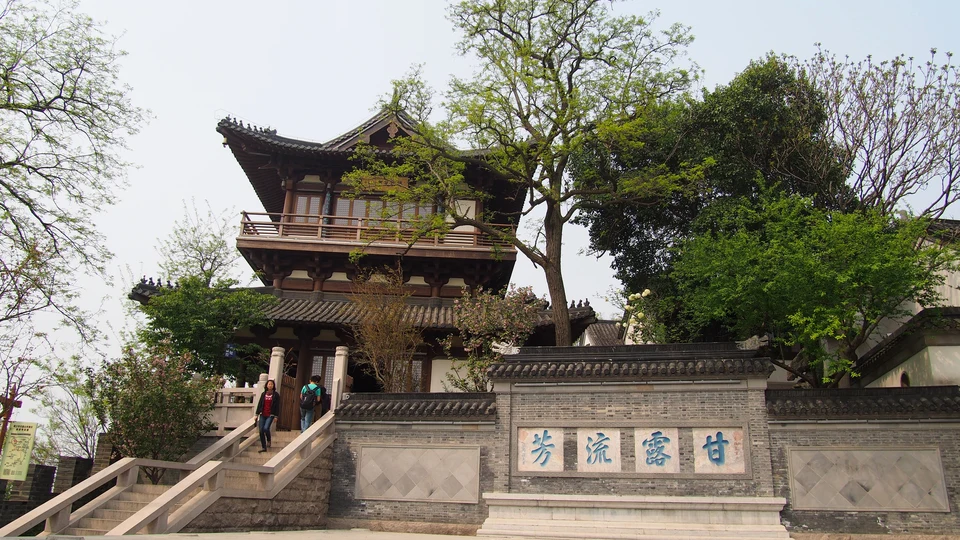
Straddling the monumental intersection where the Beijing-Hangzhou Grand Canal pierces the mighty Yangtze River, Zhenjiang (镇江) is a compact historical bastion carved into misty granite bluffs and centuries of riverine romance. Unlike its sprawling neighbours Nanjing and Suzhou, Zhenjiang remains intimate, stitched together by three legendary hills that have captivated Chinese poets for millennia. Jinshan Temple (金山寺), forever enshrined in the folklore of the Legend of the White Snake, cloaks an entire hilltop in golden-eaved Buddhist halls and soaring pagodas that once stood as an island in the river. Downstream, the rugged cliffs of Beigu Mountain (北固山) evoke epic Three Kingdoms military drama from the Duojing Tower terrace, while Jiaoshan (焦山) preserves a floating island sanctuary harbouring China’s premier outdoor forest of Tang and Song calligraphic steles. Along the surviving Qing-dynasty cobblestones of Xijin Ferry (西津渡), historic timber arcades once bustled with salt barges and vinegar urns—a heritage alive today in aromatic bowls of Guogaimian noodles and mellow, slow-aged Zhenjiang black vinegar.

How this destination fits a China trip

01

What defines it

The three iconic river hills (Jinshan, Beigu, Jiaoshan), ancient Xijin Ferry lanes, and traditional Zhenjiang black vinegar brewing.

02

Who it suits best

Three Kingdoms history enthusiasts, classical calligraphy scholars, Buddhist temple pilgrims, and adventurous foodies.

03

Plan around this

Wear slip-resistant footwear for stone steps; take the ferry to Jiaoshan during calm weather; buy vinegar from neighbourhood heritage cellars rather than temple souvenir stalls.

ChinaTrip scorecard

The same 0–10 scale is calibrated across our entire catalogue, ensuring comparisons remain strictly reliable.

Culture9/10
Food8/10
History9/10
Nightlife5/10
Heritage & Architecture9/10
Nature8/10
Wildlife3/10
Adventure5/10
Local feel9/10
Photography8/10

Plan China

Getting there & moving on

Practical transit guidance from ChinaTrip’s curated high-speed rail and flight graph. Times are realistic door-to-door estimates.

Main planning gateway

Zhenjiang Railway Station · Zhenjiang South High-Speed Station · Nanjing Lukou International Airport (NKG)

Typical access High-speed rail from Nanjing to Zhenjiang in 20 min; high-speed rail from Shanghai Hongqiao in 1 hr 15 min
Gateway transfer 15 min metered taxi or public bus from Zhenjiang Station to Jinshan Temple scenic area or Xijin Ferry historic street High-speed trains stop at both downtown Zhenjiang Station and suburban Zhenjiang South Station. Official metered taxis and public buses connect directly to the riverfront scenic areas. The city is compact and walkable between historical waterfront hills.
Entry clearance 30-Day Visa-Free Hub 50 eligible nations · No city limits

Rising at the confluence of the Yangtze River and the Beijing-Hangzhou Grand Canal, marked by rolling granite bluffs, misty riverside monasteries, and preserved Qing-dynasty ferry lanes. It features a humid subtropical climate with warm summers and cool, damp winters.

Good onward connections

These are the strongest high-speed rail next-step links in the curated ChinaTrip route graph, not an exhaustive railway timetable.

Times are realistic door-to-door high-speed rail estimates. Bullet trains run directly between central downtown stations without airport transit buffers.

When to go

Season matters. Calibrated climate, atmospheric clarity, crowd volume, and overall travel fit for Zhenjiang.

9–10 / 10 · Ideal (Best weather) 7–8 / 10 · Good (Shoulder season) 5–6 / 10 · Caution (Heat, cold or crowd peak)
Best Window
Spring (Mar–May) & Autumn (Sep–Nov)

Delightful travel conditions with blossoming gardens, golden osmanthus fragrance, and comfortable temperatures for water-town wandering.

Shoulder Season
Shoulder Season (Mar, Jun, Jul, Aug, Nov)

Manageable weather with mild days and shorter queues at signature cultural institutions.

Challenging / Low
Jul–Aug (Summer Swelter) & Jan–Feb (Damp Cold)

Mid-summer brings high humidity and temperatures reaching 38°C+. Mid-winter has piercing damp chill without central heating.

Jan 6/10 Cold
Feb 6/10 Cold
Mar 7/10 Good
Apr 9/10 Ideal
May 9/10 Ideal
Jun 8/10 Good
Jul 7/10 Good
Aug 7/10 Good
Sep 10/10 Ideal
Oct 10/10 Ideal
Nov 8/10 Good
Dec 6/10 Cold

A strong first visit in 2 days

Day 1

Jinshan Temple Waters, Xijin Ancient Ferry & Black Vinegar Cellars

What to see & do: Start at Xijin Ferry, a surviving Qing canal ferry quarter with dark timber shops and stone embankments that once served cargo boats moving vinegar and grain. Move on to Jinshan Temple, the monastery made famous by the Legend of the White Snake; circle the pagoda and the riverside courtyards, and note how the hill once stood isolated in the Yangtze before sediment shifted the shoreline. In the afternoon, visit a small traditional vinegar cellar to observe ageing ceramic urns. What tourist trap to skip: Skip overpriced 'vinegar gift sets' sold directly at temple gates; these are often bulk-produced and marked up heavily. Dining advice: Eat Guogaimian, pot-cover noodles, at a local family shop; the broth is slow-simmered bone stock, topped with tender pork and pickled vegetables. Pair with a small plate of crisp pickled radish seasoned with mature Zhenjiang vinegar.

Day 2

Beigu Mountain Three Kingdoms Relics & Jiaoshan Floating Island Stele Forest

What to see & do: Morning climb of Beigu Mountain, the dramatic cliff associated with Three Kingdoms tales, with terrace viewpoints overlooking the Yangtze. Continue by short ferry to Jiaoshan, the river island temple holding one of China’s most important collections of stone stele calligraphy, including works from Tang and Song scholars. Wander the quiet forest paths before returning to the mainland. What tourist trap to skip: Avoid costumed photo operators at Beigu’s summit selling rushed Three Kingdoms portrait packages. Dining advice: Seek crystal pig trotter, a local cold dish braised gently in vinegar and sugar; it balances richness with Zhenjiang’s sharp, mellow black vinegar.

Who does it suit?

First-time China travellers6/10
History & culture buffs9/10
Couples8/10
Families with teenagers7/10
Photographers8/10
Active travellers5/10
Slow travel8/10
Solo travellers8/10

ChinaTrip Verdict

How long should you stay?

We recommend 2–3 days · 1–2 nights for most international travelers. That gives you dedicated unhurried time to absorb the primary highlights without feeling rushed or stretching beyond the useful range.

Direct answers

Essential travel FAQ & warnings

Fact-checked official entry rules, ticket release schedules, and logistics advisories for international visitors.

Booking & Logistics Note

How can foreign visitors purchase Jinshan, Jiaoshan and Beigu Mountain combo passes without mainland WeChat?

Trip.com English sells official integrated entry tickets accepting foreign passports and international credit cards. In-person ticket windows at Jinshan and Xijin Ferry also accept physical passports for on-the-spot ticketing. Combo tickets are valid across the three hill sites within 48 hours.

Local Tip

What souvenir vinegar scams and roadside seafood traps should travelers watch for in Zhenjiang?

Many street vendors label cheap blended vinegar as 20+ year aged vinegar; genuine aged vinegar is rarely sold in tiny decorative bottles at ferry stalls. River seafood stalls near the canal sometimes quote unlisted per-gram prices for river fish. Confirm full prices before ordering.

Practical Check-in Note

What footwear advice, ferry crossing guidance, and foreign visitor registration rules apply?

Stone steps on Jiaoshan and Beigu become slippery after rain. The ferry to Jiaoshan runs on a fixed timetable and can be suspended in strong wind. Standard hotel temporary residence registration rules apply for all non-Chinese passport holders.

Universal China Travel Policies

Nationwide Regulations & Booking Rules for Foreign Passport Holders

These official real-name entry, ticketing, and immigration rules apply uniformly across all Chinese cities:

Global Booking Rule Can foreign passport holders book attraction tickets on Chinese WeChat mini-programs?

Most official Chinese WeChat mini-programs support passport as an ID type, but registration requires a mainland Chinese +86 mobile phone number for SMS verification. Most overseas visitors cannot register independently.

Global Booking Rule What booking channels are available for foreign visitors without a Chinese mobile number?

Four practical booking channels (priority order):
1. Recommended self-booking: International OTA platforms (Trip.com international site, Klook, GetYourGuide). English interface, register with overseas email or foreign mobile number, pay with Visa/Mastercard, directly fill passport details.
2. Official English website (only available for a small number of scenic sites).
3. Hotel concierge or licensed local guide. Provide your passport copy; they can book tickets via official mini-program using their Chinese mobile number.
4. Emergency on-site backup: Foreigner service ticket counter or multi-language self-service machines at the attraction. Warning: during peak seasons, timed tickets often sell out fully in advance. On-site purchase is not guaranteed and queues can be long.

Global Booking Rule Do I need to pick a visit date on Trip.com? Are booking and reservation handled on separate websites?

Booking and timed reservation are completed together inside Trip.com international site, no second website or WeChat mini-program required.
While purchasing tickets, you directly choose your visit date. Many popular attractions also require selection of entry time slot, entry gate or sightseeing route. Fill passport information and complete payment. Once confirmed, your real-name reservation slot is locked under your passport automatically.
Important Warning: A small subset of products are voucher-only; these only give a redeem code and still require separate reservation on official sites. Always select items labelled Direct Timed Entry Ticket.
For multi-day re-entry (such as Zhangjiajie’s 4-day ticket), check product description: free re-entry time slots may still need separate reservation even when your main ticket remains valid.

Global Entry Rule Can I enter attractions using only a photo or scanned copy of my passport?

No. Physical original passport is mandatory for entry at all scenic sites. Photos, screenshots, digital scans of passport are not accepted for manual verification or facial recognition checks.

Immigration & Accommodation What is the accommodation registration rule for foreign visitors?

Foreign passport holders must complete accommodation registration within 24 hours after entering China. If you check into a licensed hotel, the hotel staff will automatically complete this registration for you. No need for you to personally visit a police station.

Immigration & Accommodation What is China’s visa-free entry policy for foreign tourists?

China offers unilateral visa-free entry for citizens from a list of countries. Visa-free travel is valid for mainland China, you can travel to any city within the allowed stay period. Visa-free permission does not cover Hong Kong, Macau or Taiwan. Check the official National Immigration Administration website for the latest country list and maximum stay duration before travel.

ℹ️ All information is fact-checked against official authorities. Verified ticket & train links may earn ChinaTrip a modest commission at zero cost to you.

Does Zhenjiang sound like your China?

Use Find Your China to compare this destination with the rest of the country using your own priorities.