
2–3 days · 1–2 nights · default stay

China · Sacred Buddhist Sanctuary · Ancient Tang Timber Temples & Alpine Peaks

Mount Wutai 五台山

Discover the distinct regional charm, landscapes and culture of 五台山.

Recommended stay2–3 days · 1–2 nights
Ease of travel7/10
First China trip6/10
Infrastructure7/10
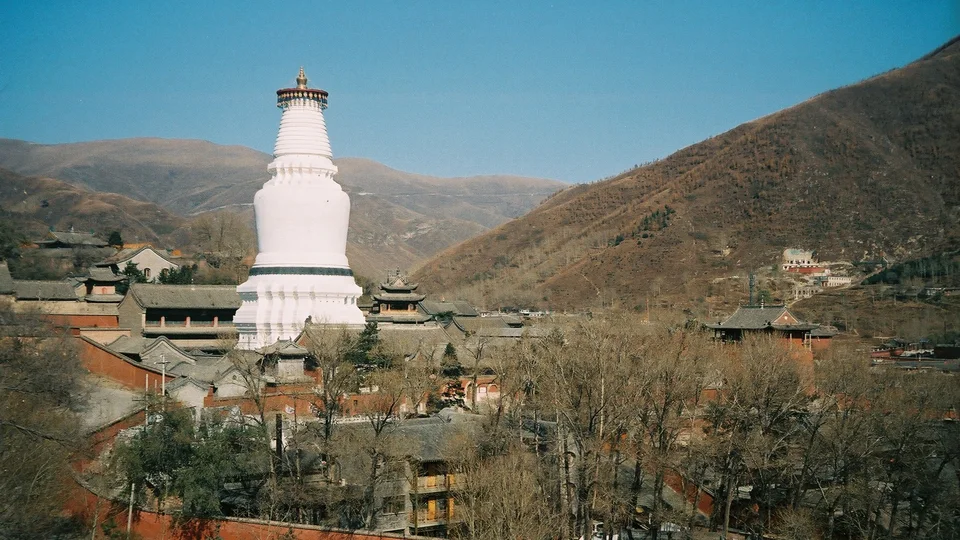
Panorama of Taihuai valley in Mount Wutai with the iconic Tayuan White Stupa rising above the temples
39.01°N · 113.58°E Sacred Buddhist Sanctuary & Tang Timber
Photo: Doron (CC BY-SA 3.0)

Why this place

Mount Wutai

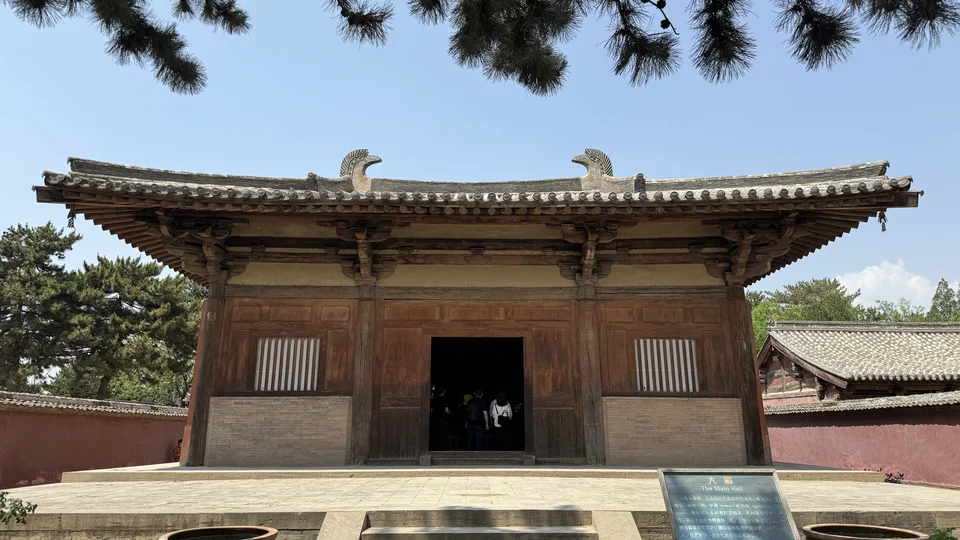
One of China’s four great Buddhist mountains and the earthly seat of Manjushri, the bodhisattva of wisdom. Its five flat-topped alpine summits form a natural basin that cradles more than one hundred monasteries, including Foguang Temple and Nanchan Temple, the only surviving wooden halls built during the Tang Dynasty. These timber structures stand as quiet, unadorned witnesses to Chinese architecture before the Song aesthetic took hold.

Most visitors race through Taihuai Valley’s crowded central temples and leave without grasping the site’s rhythm. This is not a checklist of pagodas and prayer halls. The best experience lies in slowing down, seeking out quieter monasteries beyond the main strip, and resisting aggressive incense sellers. The thin, cool air at 1,700m shapes the mood here; stillness matters more than ticking landmarks.
The ChinaTrip take

Tang Dynasty Timber Temples, Alpine Plateau Ridges, and Sacred Monastic Solitude

Cradled within an immense high-altitude basin ringed by five flat-topped summits exceeding 3,000 meters, Mount Wutai is the terrestrial sanctuary of Manjushri, the Bodhisattva of Wisdom. Beyond the lively incense smoke of the central Taihuai valley temples lies China's greatest treasure trove of pre-Song timber architecture: the monumental East Hall of Foguang Temple, built in 857 AD, and the diminutive Nanchan Temple from 782 AD—miraculously preserved wooden survivor halls featuring soaring bracket clusters and quiet Tang grace. At 1,700 meters above sea level, crisp alpine winds, sweeping wildflower meadows on the terrace ridges, and the resonant toll of bronze temple bells create an atmosphere of profound, contemplative serenity.

How this destination fits a China trip

01

What defines it

Surviving Tang dynasty wooden halls at Foguang and Nanchan, Tayuan White Stupa, five flat-topped alpine terrace ridges, and living monastic chants.

02

Who it suits best

Architectural historians, Buddhist scholars, alpine nature walkers, and contemplative travellers seeking sacred mountain tranquility.

03

Plan around this

Hire a licensed driver for the remote Tang temples outside the valley; pack warm thermal layers even in midsummer; reject unsolicited incense vendors.

ChinaTrip scorecard

The same 0–10 scale is calibrated across our entire catalogue, ensuring comparisons remain strictly reliable.

Culture10/10
Food7/10
History10/10
Nightlife3/10
Heritage & Architecture10/10
Nature9/10
Wildlife4/10
Adventure7/10
Local feel9/10
Photography10/10

Plan China

Getting there & moving on

Practical transit guidance from ChinaTrip’s curated high-speed rail and flight graph. Times are realistic door-to-door estimates.

Main planning gateway

Wutaishan Railway Station · Xinzhou Wutaishan Airport (WUT) · Taiyuan South Hub

Typical access High-speed rail via Taiyuan/Xinzhou followed by dedicated scenic mountain shuttle bus
Gateway transfer 2 hr bus transfer from Wutaishan Railway Station or 3 hr express bus from Taiyuan to Taihuai town High-speed trains link Beijing to Taiyuan South in 2.5 hours. From Taiyuan or Xinzhou, scenic area buses run directly to Taihuai village inside the valley. Inside the core valley, eco-buses connect major monasteries, while chartered minivans reach distant Tang dynasty temples like Foguang.
Entry clearance 30-Day Visa-Free Hub 50 eligible nations · No city limits

Taihuai town sits nestled in a central valley surrounded by five flat-topped peaks. Core temples are walkable, but outer historical masterpieces and peak terraces require eco-buses or local scenic hire cars.

Good onward connections

These are the strongest high-speed rail next-step links in the curated ChinaTrip route graph, not an exhaustive railway timetable.

Times are realistic door-to-door high-speed rail estimates. Bullet trains run directly between central downtown stations without airport transit buffers.

When to go

Season matters. Calibrated climate, atmospheric clarity, crowd volume, and overall travel fit for Mount Wutai.

9–10 / 10 · Ideal (Best weather) 7–8 / 10 · Good (Shoulder season) 5–6 / 10 · Caution (Heat, cold or crowd peak)
Best Window
Summer (Jun–Aug) & Early Autumn (Sep)

Pleasantly cool alpine escape (15°C–22°C) while the rest of China swelters; high meadows bloom with wildflowers and skies over the terrace summits are crystal clear in September.

Shoulder Season
Late Spring (May) & Mid-Autumn (Oct)

Larch trees turn fiery gold in October with crisp mountain light; fewer tourist crowds, though nights dip near or below freezing.

Challenging / Low
Winter & Early Spring (Nov–Apr)

Harsh sub-zero cold, biting winds, and frequent snow and ice closures across mountain passes to the outer peak terraces.

Jan 4/10 Cold
Feb 4/10 Cold
Mar 5/10 Caution
Apr 6/10 Caution
May 8/10 Good
Jun 9/10 Ideal
Jul 9/10 Ideal
Aug 9/10 Ideal
Sep 10/10 Ideal
Oct 8/10 Good
Nov 5/10 Caution
Dec 4/10 Cold

A strong first visit in 2 days

Day 1

Taihuai Temple Valley, Tayuan White Stupa & Xiantong Monastery

Start at Tayuan Temple to view the iconic white Sarira Stupa, then move to Xiantong Monastery, Wutai’s oldest and largest monastic compound. Walk to Pusa Ding and Dailuoding for elevated valley views, and pause at Wuye Temple to observe local devotional practices. Ride the mandatory eco-shuttle between spread-out valley sites. Reject anyone pressing expensive high incense or promising paid blessings, fortune readings or merit certificates; all major temples supply simple free incense for visitors. Avoid unmarked private drivers offering “secret temple tours” at inflated fixed rates. Dine on vegetarian buffet at Puhua Temple focused on local mountain mushrooms, or pick small family-run restaurants along Yangbaiyu Road for wild mushroom noodles.

Day 2

Tang Dynasty Timber Masterpieces: Foguang Temple & Nanchan Temple

Hire a licensed local minivan for the 40-minute drive out of Taihuai Valley to Foguang Temple. Spend time studying its main hall, built in 857 AD, and its subtle bracket sets and wall paintings. Continue onward to Nanchan Temple, the oldest surviving timber building in China (782 AD). Return to Taihuai in the late afternoon for quiet walking away from crowds. Do not accept guides who overstate the rarity of these two temples to charge premium rates; printed English placards cover core context. Pack water and snacks for the remote morning trip, and try local wild mushroom stew at a quiet family restaurant back in Taihuai.

Who does it suit?

First-time China travellers5/10
History & culture buffs10/10
Couples8/10
Families with teenagers7/10
Photographers10/10
Active travellers7/10
Slow travel7/10
Solo travellers8/10

ChinaTrip Verdict

How long should you stay?

We recommend 2–3 days · 1–2 nights for most international travelers. That gives you dedicated unhurried time to absorb the primary highlights without feeling rushed or stretching beyond the useful range.

Direct answers

Essential travel FAQ & warnings

Fact-checked official entry rules, ticket release schedules, and logistics advisories for international visitors.

Booking & Logistics Note

How do foreign passport holders reserve Mount Wutai entry tickets without mainland WeChat verification?

You can book entry tickets and eco-shuttle passes via Trip.com English site using your passport details. If online booking fails, bring your passport directly to the official visitor centre counter to purchase tickets on-site. The core valley eco-shuttle ticket is mandatory for all visitors and valid for 48 hours. Separate small tickets for individual temples such as Tayuan and Xiantong can be bought at each temple gate with passport.

Local Tip

How to sample authentic Buddhist vegetarian cuisine and avoid incense scams in Mount Wutai?

Genuine temple vegetarian meals follow fixed service times, usually 11:00 for lunch. Do not accept incense handed to you by roving vendors; they will demand payment after you take it. Temples provide free standard incense for worship. Local vegetarian cooking leans heavily on tai mushroom, a rare alpine fungi foraged locally. Avoid any vendor claiming their incense carries special blessed status.

Practical Check-in Note

What transport rules and hotel registration apply when staying in Mount Wutai?

Private cars cannot enter the Taihuai core zone; you must park at the outer visitor centre and transfer via eco-shuttle. All foreign passport holders must complete standard accommodation registration at the hotel front desk within 24 hours of arrival. Nights are cold even in summer, and altitude may bring mild shortness of breath for less active travellers; pace your stair climbs.

Universal China Travel Policies

Nationwide Regulations & Booking Rules for Foreign Passport Holders

These official real-name entry, ticketing, and immigration rules apply uniformly across all Chinese cities:

Global Booking Rule Can foreign passport holders book attraction tickets on Chinese WeChat mini-programs?

Most official Chinese WeChat mini-programs support passport as an ID type, but registration requires a mainland Chinese +86 mobile phone number for SMS verification. Most overseas visitors cannot register independently.

Global Booking Rule What booking channels are available for foreign visitors without a Chinese mobile number?

Four practical booking channels (priority order):
1. Recommended self-booking: International OTA platforms (Trip.com international site, Klook, GetYourGuide). English interface, register with overseas email or foreign mobile number, pay with Visa/Mastercard, directly fill passport details.
2. Official English website (only available for a small number of scenic sites).
3. Hotel concierge or licensed local guide. Provide your passport copy; they can book tickets via official mini-program using their Chinese mobile number.
4. Emergency on-site backup: Foreigner service ticket counter or multi-language self-service machines at the attraction. Warning: during peak seasons, timed tickets often sell out fully in advance. On-site purchase is not guaranteed and queues can be long.

Global Booking Rule Do I need to pick a visit date on Trip.com? Are booking and reservation handled on separate websites?

Booking and timed reservation are completed together inside Trip.com international site, no second website or WeChat mini-program required.
While purchasing tickets, you directly choose your visit date. Many popular attractions also require selection of entry time slot, entry gate or sightseeing route. Fill passport information and complete payment. Once confirmed, your real-name reservation slot is locked under your passport automatically.
Important Warning: A small subset of products are voucher-only; these only give a redeem code and still require separate reservation on official sites. Always select items labelled Direct Timed Entry Ticket.
For multi-day re-entry (such as Zhangjiajie’s 4-day ticket), check product description: free re-entry time slots may still need separate reservation even when your main ticket remains valid.

Global Entry Rule Can I enter attractions using only a photo or scanned copy of my passport?

No. Physical original passport is mandatory for entry at all scenic sites. Photos, screenshots, digital scans of passport are not accepted for manual verification or facial recognition checks.

Immigration & Accommodation What is the accommodation registration rule for foreign visitors?

Foreign passport holders must complete accommodation registration within 24 hours after entering China. If you check into a licensed hotel, the hotel staff will automatically complete this registration for you. No need for you to personally visit a police station.

Immigration & Accommodation What is China’s visa-free entry policy for foreign tourists?

China offers unilateral visa-free entry for citizens from a list of countries. Visa-free travel is valid for mainland China, you can travel to any city within the allowed stay period. Visa-free permission does not cover Hong Kong, Macau or Taiwan. Check the official National Immigration Administration website for the latest country list and maximum stay duration before travel.

ℹ️ All information is fact-checked against official authorities. Verified ticket & train links may earn ChinaTrip a modest commission at zero cost to you.

Does Mount Wutai sound like your China?

Use Find Your China to compare this destination with the rest of the country using your own priorities.